
What Causes Blocked Drains at Home?
A sink that starts gurgling on Monday can turn into a backed-up shower or overflowing outside drain by Friday. That is usually how it goes – a small warning sign gets ignored until the problem becomes messy, urgent and more expensive than it needed to be. If you are wondering what causes blocked drains, the short answer is that most blockages build up over time, but the reason behind them depends on where the problem is and what has been going into it.
We see the same patterns again and again. Kitchen drains clog for one reason, bathroom drains for another, and outdoor sewer lines for a completely different set of causes. Knowing the difference helps you act early and avoid damage to your pipes, fixtures and surrounding property.
What causes blocked drains in kitchens
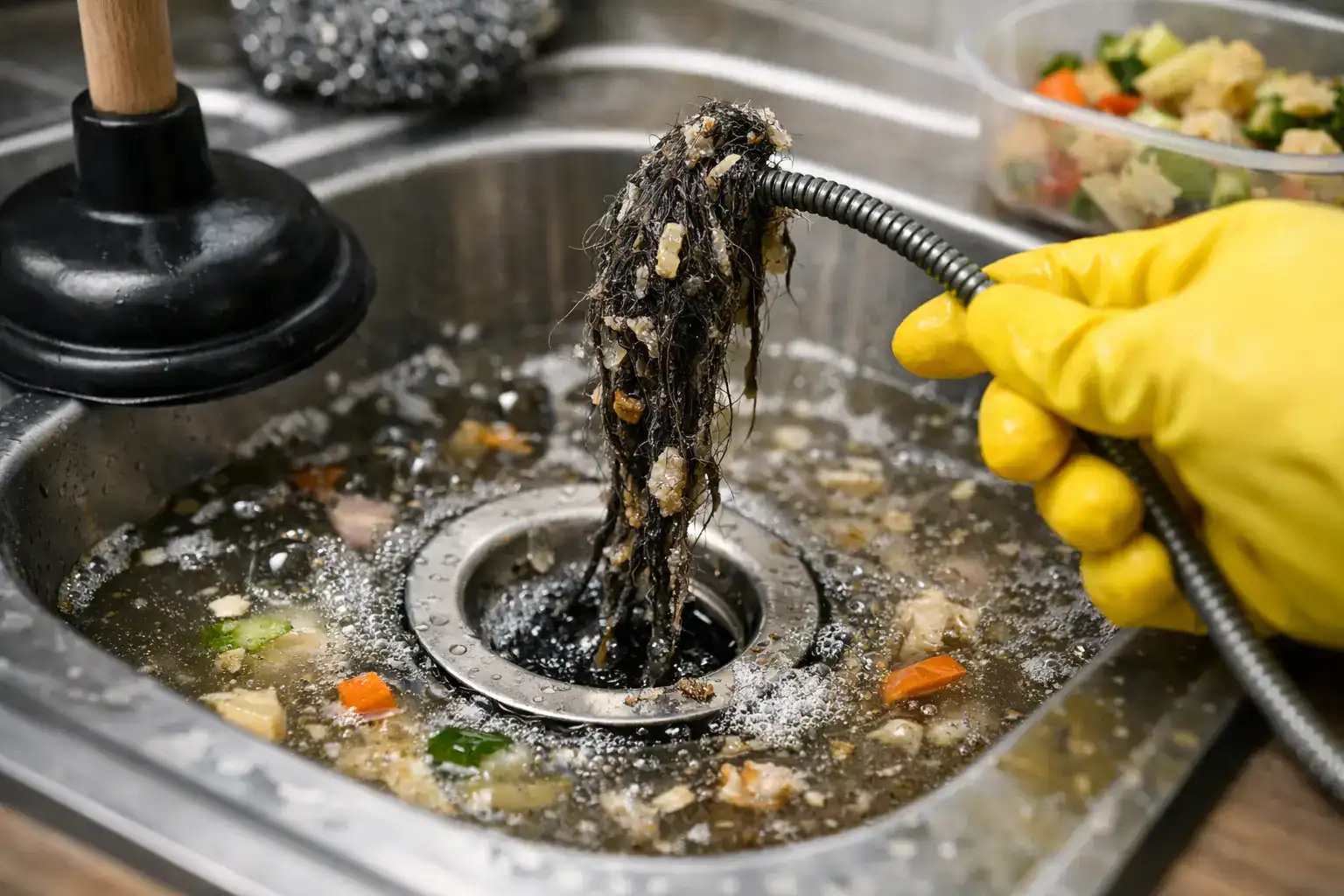
Kitchen drains usually block because everyday waste does not wash away as cleanly as people expect. Grease, oil and fat are some of the biggest culprits. They may go down the sink as liquid, but they cool inside the pipe and start sticking to the walls. Once that sticky layer forms, food scraps, coffee grounds and soap residue catch on it and the pipe gradually narrows.
This is why a kitchen sink can seem fine one week and painfully slow the next. It is rarely one big lump causing trouble. More often, it is a build-up that has been forming for months.
Even homes with strainers fitted can still end up with blocked kitchen drains. Small scraps slip through, dishwashing habits vary, and some people rinse plates with too much food left on them. In investment properties and commercial kitchens, the risk is often higher because the sink gets heavier use and more waste goes down in a shorter time.
Bathroom drains block for different reasons
In bathrooms, hair is the main problem. It tangles with soap scum, shampoo residue and toothpaste, then gathers into a dense blockage just below the waste. Shower and basin drains are especially prone to this because the pipework is narrower and catches debris easily.
Toilet blockages are a separate issue. Too much toilet paper can cause a temporary jam, but wipes, sanitary items, cotton buds and paper towel are more serious. Even products labelled flushable can create major trouble once they hit bends in the pipe or meet tree roots further down the line. Toilets are designed for human waste and toilet paper – not much else.
There is also a difference between a local bathroom blockage and a main sewer problem. If one basin is slow, the issue may be close to that fixture. If multiple drains are backing up at once, especially if the toilet is involved, the blockage may be deeper in the system and needs prompt attention.
Outdoor drains and sewer lines often have hidden causes
When people ask what causes blocked drains, they often think about food or hair first. But outside the home, the bigger causes are tree roots, cracked pipes and stormwater debris.
Tree roots are one of the most common reasons sewer drains block in established suburbs. Roots naturally seek moisture, and even a small crack or loose joint in an underground pipe can attract them. Once they get inside, they keep growing and start trapping paper, waste and sludge. Over time, the pipe can become badly restricted or even break apart.
In areas with older plumbing infrastructure, this is especially common. A drain may not be completely collapsed, but it can still be damaged enough to keep blocking again and again. Clearing the obstruction may restore flow temporarily, but if the pipe itself is compromised, the issue will return.
Stormwater drains are another matter. Leaves, dirt, mulch, silt and garden debris can wash into grates and pits during heavy rain. If that material is not cleared, water can back up around the property. This can look like a drainage issue caused by the weather, but often the real problem is a blocked stormwater line that has not been maintained.
Common warning signs before a drain blocks completely
Most blocked drains give a bit of notice before they become emergencies. The trouble is that people are busy, and the early signs are easy to brush off. A slow-draining sink or shower is usually the first clue. Unpleasant smells from a drain often point to waste sitting in the line instead of flowing away properly.
If water rises in one fixture when another is used, that is a stronger warning sign. For example, if the shower fills when the washing machine drains, or the toilet bubbles when you run a tap, the system may be partially blocked further down. Outdoor signs matter too. Overflowing traps, soggy ground near sewer lines or water pooling around external drains should not be ignored.
Why DIY drain fixes do not always solve the problem
A supermarket drain cleaner might clear a small build-up near the waste, but it will not fix every blockage. In some cases, those products do very little. In others, they can damage older pipes or make the job more unpleasant when a plumber has to work on the line afterward.
Plungers and basic hand tools can help for simple blockages close to the fixture. That is reasonable if the problem is minor and isolated. But if the drain keeps blocking, affects multiple fixtures or causes wastewater to back up, the real issue is usually deeper than a quick DIY fix can reach.
This is where proper diagnosis matters. A blocked drain is not always just a blockage. It can be a sign of root intrusion, a broken pipe, poor fall, heavy scale build-up or a section of line that is starting to fail. Treating every problem the same way wastes time and money.
What causes blocked drains to keep coming back
Recurring drain problems usually mean there is an underlying fault that has not been dealt with properly. Clearing the immediate obstruction can restore flow, but if roots remain, the pipe is cracked, or grease keeps collecting in a badly designed section of line, the blockage will return.
That is why repeat blockages should never be written off as bad luck. If the same toilet, sink or outside drain is causing trouble every few months, there is a reason. The most cost-effective approach is often to identify the exact cause and fix it properly rather than paying for repeated call-outs.
For some properties, especially older homes and commercial sites, the best long-term option may be pipe repair or relining rather than endless drain clearing. It depends on the condition of the pipe, the location of the damage and how often the issue has been happening.
When to call a plumber straight away
Some blocked drains can wait a few hours. Others should be treated as urgent. If sewage is backing up inside, water is overflowing outdoors near the house, or multiple fixtures have stopped draining at once, do not leave it. The longer wastewater sits where it should not, the higher the risk of property damage, hygiene issues and more expensive repairs.
The same applies if you have tried a simple fix and nothing has changed, or the problem improves briefly and then returns. Fast action usually means a faster, cleaner repair. For local properties, that can make a real difference when the blockage is affecting a family home, rental, café, office or any site that needs to stay operational.
At that point, you want a licensed plumber who can do more than poke at the symptom. You want a local team who can locate the cause, explain the options clearly and fix it thoroughly. That is the difference between a quick patch-up and a repair that actually holds up.
How to reduce the risk of blocked drains
Good habits help, even though they cannot prevent every issue. Keep fats and oils out of the kitchen sink, scrape plates into the bin, and use a strainer where it makes sense. In the bathroom, remove hair from the shower waste regularly and never flush wipes or hygiene products. Outside, keep grates clear of leaves and garden debris, especially before heavy rain.
That said, maintenance has limits. If tree roots are invading a sewer line or an old pipe is cracked underground, careful habits indoors will not solve that. The smartest move is to act early when the signs first appear.
Blocked drains rarely fix themselves, and they almost always become harder to deal with once they are left alone. If your drains are slow, noisy, smelly or backing up, get them checked before a nuisance turns into a full-blown plumbing emergency. A prompt inspection now can save a lot of stress later.