
Storage vs Continuous Flow Hot Water
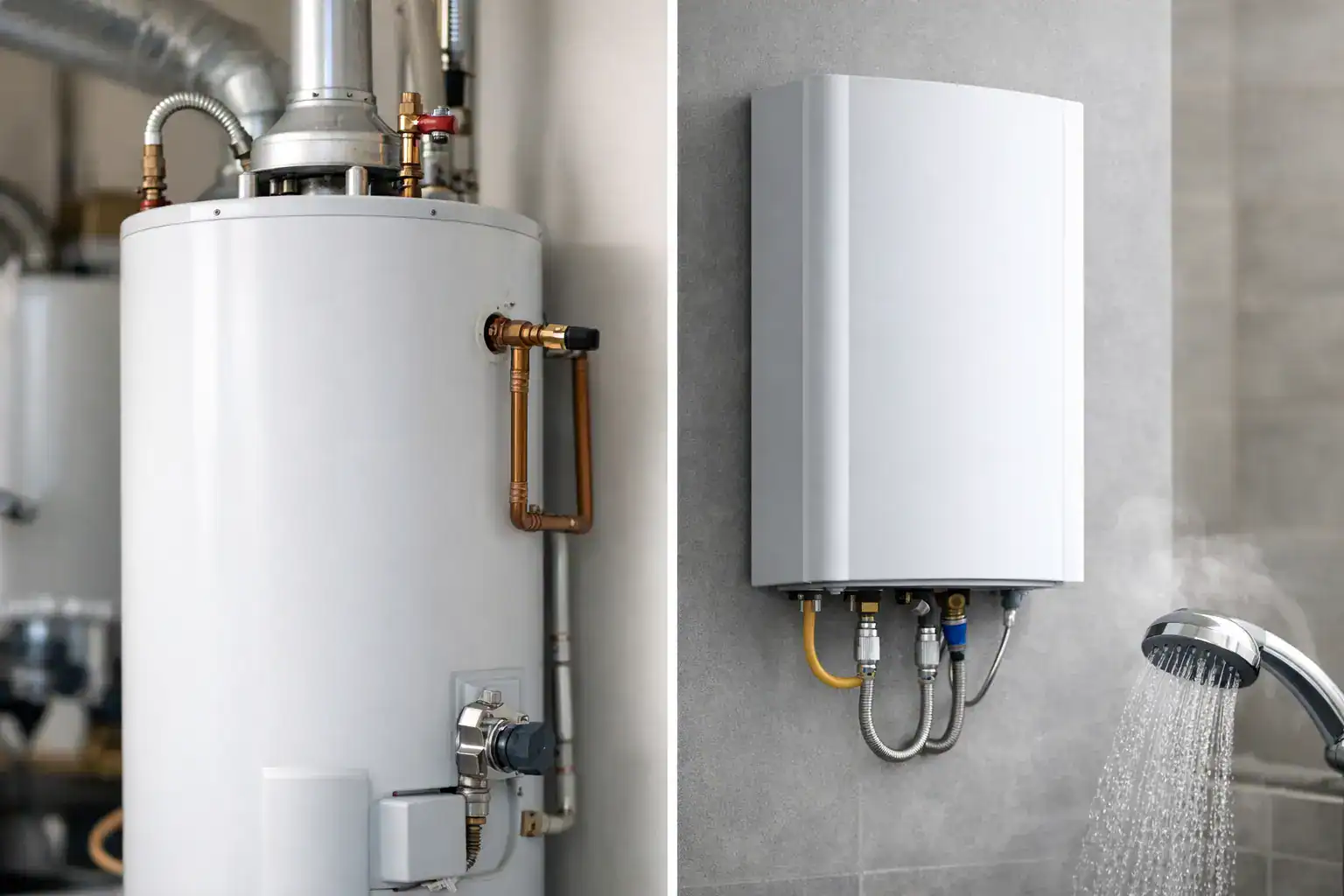
If your hot water system is on its last legs, the wrong replacement can be an expensive mistake. When people ask about storage vs continuous flow hot water, what they usually want to know is simple – which one will give reliable hot water, suit the property, and not blow out the bills.
The answer depends on how your home or site uses hot water day to day. A busy family in Penrith has different needs to a small unit, a rental property, or a commercial bathroom with steady demand. That is why it pays to look beyond the brochure and choose a system that actually fits the building, usage patterns, and budget.
Storage vs continuous flow hot water: what is the difference?
A storage hot water system heats water and keeps it in a tank ready for use. That tank might be electric, gas, solar-boosted, or heat pump depending on the setup. When someone turns on a tap or shower, the system draws from the stored hot water already sitting in the cylinder.
A continuous flow system, sometimes called instantaneous hot water, heats water as it passes through the unit. There is no storage tank holding a large volume of hot water in reserve. Instead, the unit fires up when you open the tap and heats water on demand.
On paper, that sounds like a very easy choice. In real homes, it is not always that straightforward. Each setup has genuine strengths, and each comes with trade-offs.
When storage hot water makes more sense
Storage systems are still a very practical choice for plenty of properties across Western Sydney and the Lower Blue Mountains. They are familiar, widely used, and often well suited to households with predictable demand.
One of the biggest advantages is their ability to deliver strong hot water flow to several outlets at once, depending on the tank size and recovery rate. If you have a family home where showers, laundry and kitchen use often overlap, a correctly sized storage system can cope well.
They can also be a sensible option when replacing an existing tank system. In some cases, keeping the same style of setup can reduce installation complexity, particularly if the plumbing layout, power supply or gas connection already suits it. That can mean a faster replacement and a more manageable upfront cost.
Electric storage systems also work well with some off-peak electricity tariffs, as well as solar and heat pump arrangements. For households trying to balance installation costs with long-term efficiency, that can be worth considering.
The catch is that once the stored hot water runs out, you are waiting for the tank to recover. If everyone showers back-to-back and the dishwasher kicks in after that, the last person may not be impressed. Tanks also take up more room, which matters in smaller homes or tight service areas.
When continuous flow hot water is the better fit
Continuous flow systems appeal to a lot of property owners because they heat water only when needed. That can reduce energy waste compared with keeping a full tank hot all day and night.
For smaller households, units, granny flats and properties where space is tight, continuous flow can be a smart upgrade. The units are compact, usually wall-mounted, and free up valuable room that would otherwise be taken by a cylinder.
The other big selling point is not running out of stored hot water. As long as the system is correctly sized and the incoming supply is suitable, you can keep drawing hot water without emptying a tank. That is useful in homes where shower times are spread out or where occupants want more flexibility.
Continuous flow is often a strong choice for gas hot water, especially in homes already connected for gas. But the system still needs to be matched properly to the property. If the unit is undersized and several fixtures run at once, you may notice reduced performance. The issue is usually not that continuous flow is bad – it is that the wrong unit was installed for the demand.
Upfront cost versus running cost
This is where many property owners get stuck, and fair enough. Most people are not choosing between systems for fun. They are replacing a failed service or trying to avoid another round of repairs.
Storage systems can sometimes be cheaper to buy and install, particularly if you are doing a like-for-like replacement. That can be attractive for landlords, budget-conscious households, and anyone dealing with an urgent hot water failure.
Continuous flow systems can cost more upfront depending on the brand, output, and whether extra gas, flue or plumbing work is needed. But in the right property, they may offer better efficiency over time because they are not constantly reheating stored water.
That said, running cost is never just about the unit itself. It depends on whether the system is electric or gas, how many people are using hot water, when they use it, the local energy rates, and how well the system has been installed and maintained. A cheap system that is badly sized or poorly installed can end up costing more in the long run.
Size matters more than people expect
The storage vs continuous flow hot water decision often comes down to sizing. A good system on paper can become a bad choice if it does not match the actual demand.
With storage, the tank volume and recovery rate need to suit the household. Too small, and you run short. Too large, and you may pay to keep more water hot than you need.
With continuous flow, the flow rate is critical. A larger home with multiple bathrooms may need a higher-capacity unit, or a different strategy altogether, to maintain temperature and pressure when more than one outlet is in use.
This is why a proper site-based recommendation matters. The number of bathrooms, the type of fixtures, available services, roofed or outdoor location, and existing energy setup all influence what will work best.
Space, maintenance and lifespan
If space is tight, continuous flow usually has the edge. A compact wall-mounted unit is easier to fit in many homes and commercial sites, especially where every bit of storage or access matters.
Storage systems, by contrast, need room for the tank and safe access for servicing or replacement. In some older properties, that is no issue. In others, particularly when the existing tank is awkwardly placed, it can become a factor.
Maintenance varies by model and water conditions. Storage tanks can suffer from sediment build-up, corrosion and valve issues over time. Continuous flow units can also develop faults, especially if not serviced, but they avoid some of the tank-related wear that comes with storing heated water.
No system lasts forever. The goal is not to pick a unit that sounds perfect in theory. It is to install one that suits the property and gets proper maintenance so it performs reliably for years.
The right system is the one that fits your property
If your current hot water service is failing, this is not the time for guesswork. The best choice between storage and continuous flow comes down to demand, available space, installation requirements, energy source, and budget.
A bigger household is not always better off with one type. A smaller property is not automatically suited to the other. What matters is having the system properly assessed, correctly sized, and installed by a licensed plumber and gas fitter like Shipways who gives clear advice instead of pushing a one-size-fits-all answer.
If you are weighing up a replacement, contact Shipways for a quote, especially when hot water is something you only notice once it is gone.