
Gas Hot Water Not Heating? What to Check
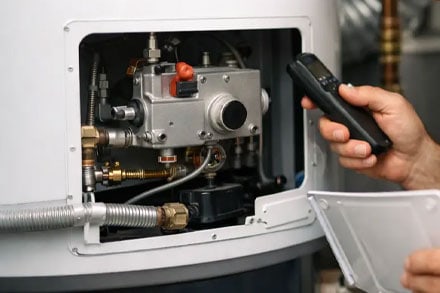
A gas hot water system only works properly when a few key things all line up at once. The unit needs a steady gas supply, working ignition, correct water flow, healthy components and safe ventilation. If one part drops out, you can end up with no hot water, inconsistent temperature, or water that starts warm and then turns cold.
Storage systems and continuous flow units can fail in different ways. A storage unit may struggle because the burner is not firing or the thermostat is not reading properly. A continuous flow system may have ignition issues, a flow sensor fault or internal component wear that stops it from producing heat on demand. That is why the symptoms matter. Cold water all the time points to one set of problems. Hot water that cuts in and out points to another.
Age is another factor. If your system is older and repairs are becoming more frequent, you are not just paying for the fault in front of you. You are paying for the next one as well.
First checks when gas hot water is not heating
Before calling for repairs, there are a few practical things worth checking. The key word is safely. If you smell gas, hear hissing, or have any concern about a leak or unsafe operation, turn the appliance off if safe to do so and call a licensed gas fitter immediately.
Start with the obvious. Check whether other gas appliances in the property are working as normal. If your cooktop or heater is also affected, the issue may be with the gas supply rather than the hot water unit itself. If only the hot water system is playing up, the fault is more likely inside the appliance.
Next, look at the power supply if your unit uses electronic ignition. Many gas hot water systems still rely on power for ignition, controls or display functions. A tripped switch, flat battery backup or power interruption can stop heating even though the system runs on gas.
If your unit has a controller or display, check for error codes. These can help narrow down the problem quickly, especially on modern Rheem, Rinnai, Dux and Thermann units. Do not pull panels off or start dismantling anything. Just note the code and pass it on to us when you book the job.
Also check whether the hot water problem is happening at every outlet. If one shower is cold but the rest of the property has hot water, you may be dealing with a tap, tempering valve or local plumbing issue rather than a full system failure.
Common causes of gas hot water not heating
One of the most common faults is ignition failure. If the burner cannot ignite, the water will not heat. On older systems, this may relate to the pilot light. On newer systems, it may be the igniter, flame sensor or electronic control faulting.
A faulty thermostat or temperature sensor can also cause trouble. If the system is not reading the water temperature correctly, it may fail to heat properly or shut down early. In continuous flow units, flow sensor issues are also common. If the unit cannot detect enough water movement, it may not fire at all.
Then there is plain old wear and tear. Valves, burners, thermocouples, heat exchangers and control boards do not last forever. If a unit has been running for years in hard service, especially in a larger household or busy commercial setting, parts eventually fail.
What you should not do
Do not remove covers, do not attempt gas repairs yourself, and do not ignore warning signs like unusual smells, rumbling noises or water leaking from the unit. Those signs can point to faults that need urgent attention.
The same goes for replacement decisions. A lot of people spend good money repairing a system that is already at the end of its service life. If the unit is old, unreliable or struggling to keep up with demand, a replacement may be the better financial call. A proper assessment helps you avoid paying twice.
Repair or replace? It depends on the system
Not every gas hot water fault means the system needs replacing. If the unit is relatively modern and the issue is limited to a part like an igniter, valve or sensor, a repair is often the sensible option. A straightforward fix can get you back up and running quickly without the cost of a new system.
But if the system is older, parts are becoming harder to source, or the repair bill is climbing, replacement starts to make more sense. This is especially true when the unit has already had repeated issues or no longer matches the property’s hot water demand.
Our licensed plumbers and gas fitters will be able to tell you plainly whether the fault is worth repairing, what the cost looks like, and whether a replacement will save money over time.
When to call for urgent help
Some hot water faults can wait a few hours. Others should be treated as urgent. If you have no hot water at all, a gas smell, visible leaking around the unit, signs of scorching, inconsistent burner operation or repeated shutdowns, it is time to book help straight away.
Preventing the next hot water breakdown
You cannot stop every fault, but you can reduce the chances of sudden failure. Regular servicing helps pick up worn parts, burner issues, valve trouble and early signs of poor performance before the system goes cold altogether.
It also helps to pay attention to small changes. If the water is taking longer to heat, the temperature is fluctuating, or the unit is making new noises, those are early warnings worth acting on. A fast repair now is usually cheaper than an emergency replacement later.
If your gas hot water not heating problem is happening now, get it checked properly by a Shipways local professionals who can tell you exactly what has failed, what it will cost, and whether repair or replacement is the smarter option. At Shipways Plumbing, that means clear advice, upfront pricing and getting your hot water sorted properly so you can get on with your day.