
Dripping Tap? What’s Causing It and How to Fix It
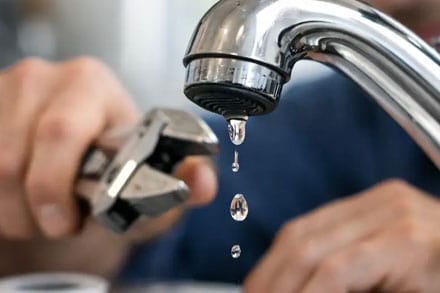
Most dripping taps come down to wear and tear. Washers flatten, O-rings crack, ceramic discs wear, valve seats corrode, and internal seals stop doing their job. In older properties, especially where taps have seen years of daily use, it is common to find several small issues at once rather than one single fault.
The type of tap can fail in different ways. A traditional spindle tap often starts dripping because the washer has hardened or split. Mixer taps and quarter-turn taps usually fail with cartridge or ceramic disc issues causing a constant drip or a tap that no longer shuts off cleanly. If someone has been tightening the handle harder and harder to stop the leaking tap, that can make the damage worse.
High water pressure puts stress on internal tap components. In some cases, what looks like a tap problem is tied to a broader plumbing issue that needs checking properly.
Why a small drip is worth fixing quickly
A dripping tap does not always feel urgent, but leaving it too long can cost more than people expect. Water wastage adds up, particularly when a tap is dripping around the clock and that can mean unnecessary costs for homeowners, often means paying for water you never actually used.
There is also the risk of hidden damage. A leak around the base of the tap or under the sink can affect cabinetry, swelling timber and damaging finishes. In commercial bathrooms or kitchens, ongoing drips can create hygiene and maintenance issues that are better handled early.
Dripping tap repair: when it is simple and when it is not
Some tap repairs are very straightforward when the right part is available and the tap body is still in good condition. Replacing a washer, reseating a valve, or fitting a new cartridge can restore the tap and stop the leak and this may be a fairly easy DIY fix.
But it depends on the tap’s age, brand, condition and how long the issue has been left. Older taps may have worn threads or corrosion inside the body, which means replacing one part will not always give a lasting result. Imported or discontinued tapware can also be difficult to match with the correct replacement parts.
If the tap has already been pulled apart once or twice, there is also a fair chance that something has been overtightened, cross-threaded or damaged in the process. At that point, a simple repair may become a more involved rebuild or a full replacement when it probably makes sense to call the professi0nals.
DIY Dripping Tap Fixes You Can Try
1. Check and tighten the tap handle
Sometimes what appears to be a faulty tap is simply a loose handle.
How to do it:
- Turn the tap off.
- Check the handle for a visible retaining screw.
- Tighten it gently with the appropriate screwdriver or Allen key.
- Turn the tap back on and check whether the dripping has stopped.
Avoid: Over-tightening the screw or handle. You can damage the threads or crack plastic components.
2. Replace a worn tap washer
Traditional two-handle taps often use a rubber washer to create a seal. A worn or damaged washer is one of the common causes of a tap that continues to drip from the spout.
How to do it:
- Turn off the water supply.
- Open the tap to release any remaining pressure.
- Remove the decorative cap and handle.
- Remove the tap spindle or valve mechanism.
- Inspect the washer for wear, cracking or deformation.
- Replace it with the correct size and type.
- Reassemble the tap and slowly turn the water back on.
- Check for leaks.
Avoid: Guessing the washer size or forcing components apart. If the spindle is seized or corroded, it’s usually better to have a plumber deal with it.
3. Clean the aerator
If water is spluttering, flowing unevenly or leaking around the end of the tap, mineral deposits or debris may be involved.
How to do it:
- Unscrew the aerator from the end of the tap.
- Rinse away debris.
- Soak removable components in an appropriate descaling solution if necessary.
- Rinse thoroughly and reinstall.
This is a relatively low-risk maintenance job, provided the aerator comes off easily.
4. Check a mixer tap cartridge
Modern mixer taps generally use a ceramic cartridge rather than a traditional washer. A worn cartridge can cause dripping, difficulty controlling temperature or water continuing to flow when the tap is turned off.
Replacing a cartridge is possible as a DIY job on some taps, but the correct cartridge must be identified and the tap needs to be disassembled carefully.
DIY Dripping Tap Repairs: What to Avoid
Don’t keep tightening a dripping tap. More force doesn’t necessarily create a better seal and can damage the tap seat, washer, cartridge or threads.
Don’t force a seized component. If the handle, spindle or cartridge won’t come apart, excessive force can damage the tap or the plumbing connection behind it.
Don’t use the wrong replacement parts. Washers, O-rings and cartridges aren’t universally interchangeable.
Don’t ignore a leak around the base or body of the tap. A leak from somewhere other than the spout may indicate a failed seal, damaged tapware or a problem with the connection.
Don’t attempt repairs if you can’t isolate the water supply. You need to be able to shut off the water before dismantling the tap.
Don’t continue dismantling the tap if water won’t stop. That’s a good point to stop and call a plumber.
When to Call a Professional Plumber
Call a professional if:
- The tap continues dripping after replacing the washer or cartridge.
- You can’t remove a seized or corroded component.
- The tap is leaking from the wall, base or pipe connection.
- The tap or pipework is damaged or badly corroded.
- You can’t shut off the water supply.
- The repair requires access to concealed plumbing.
- You’ve attempted a repair and the leak has become worse.
- You’re unsure which replacement part you need.
And importantly:
A dripping tap may look like a minor problem, but repeatedly replacing washers or tightening the handle won’t fix an underlying problem with the tap itself.
Not comfortable taking your tap apart? That’s perfectly fine. A dripping tap is a relatively common plumbing problem, but attempting the wrong repair can turn a small leak into a much bigger problem. If you can’t identify the cause or the tap needs more than a simple washer replacement, it’s best to have a qualified plumber inspect it. Shipways Plumbers Penrith can diagnose the cause and repair or replace leaking and dripping taps throughout Penrith and Western Sydney.
Repair or replace?
If the tap is a good-quality fitting, parts are available and the body is sound, repairing it usually makes sense. It is cost-effective and gets things back to normal quickly.
If the tap is old, heavily worn, badly corroded or cheap enough that replacement parts cost nearly as much as a new unit, replacement may be the better option. The same goes for taps that have already had repeated repairs. There is little value in spending money over and over on a fitting that keeps failing.
Getting help before the drip becomes a bigger problem
If your tap is dripping now, it is already asking for attention. Waiting usually means more wasted water, more frustration and a higher chance of damage or a more involved repair later. Whether it is a bathroom basin tap, kitchen mixer, laundry tap or commercial fitting, don’t put it off, getting it checked early is the sensible move.
At Shipways Plumbing, we handle dripping tap repair with the same approach we bring to every job – fast response, honest upfront pricing, and proper workmanship that fixes the issue thoroughly. If you are in Penrith, Western Sydney or the Lower Blue Mountains and the drip is not stopping, get it sorted before it turns into something more expensive. Call Shipways Plumbing today on 0410 638 342 or fill out our online contact form to book a service! Our team is ready to help.